Because we fight for everyone to have a home, not merely a shelter.
For several years, DoucheFLUX has chosen to use the French terms personnes sans-chez-soi (“people without a home”) and sans-chez-soirisme rather than the more commonly used French term sans-abrisme.
Why? Because when we set out to translate and name the issue in French, we faced a problem: “homelessness” and “sans-abrisme” do not quite mean the same thing.
In English, homelessness refers to being without a home. In French, sans-abri literally means “without shelter”. Yet being without a home does not necessarily mean being without a roof or a temporary place to stay.
This distinction matters.
Why talk about sans-chez-soirisme and personnes sans-chez-soi?
1. Because we fight for the right to housing
Every day, we work so that everyone can have access to a real home: a place that is dignified, safe, secure and suited to their needs.
2. Because we need to acknowledge that most of homeless people have a shelter
The latest count carried out in the Brussels-Capital Region found that, in November 2024, 9,777 people were experiencing homelessness, of whom around 1,000 were sleeping rough.
The vast majority of people experiencing homelessness do have some form of shelter — whether makeshift accommodation or temporary emergency housing, provided by family members or institutions.
Using the French term sans-abrisme therefore focuses on only a fraction of the people concerned: roughly one person in ten is sleeping on the streets, while the vast majority remain invisible behind the notion of “being without shelter”.
3. Because we fight for the best solutions
Talking about people who are “without shelter” can suggest that providing shelter is enough to solve the problem. Talking about people who are without a home shifts the focus towards the only solution that is acceptable in the long term: enabling people to have a place they can truly call home.
4. Because we want for homelessness to end
Using the term sans-chez-soirisme is also a way of rejecting the idea that homelessness is inevitable. If people are without a home, then we must ask why — and work towards sustainable solutions: homes and living spaces where people can actually feel at home.
How does DoucheFLUX fight for the end of homelessness ?
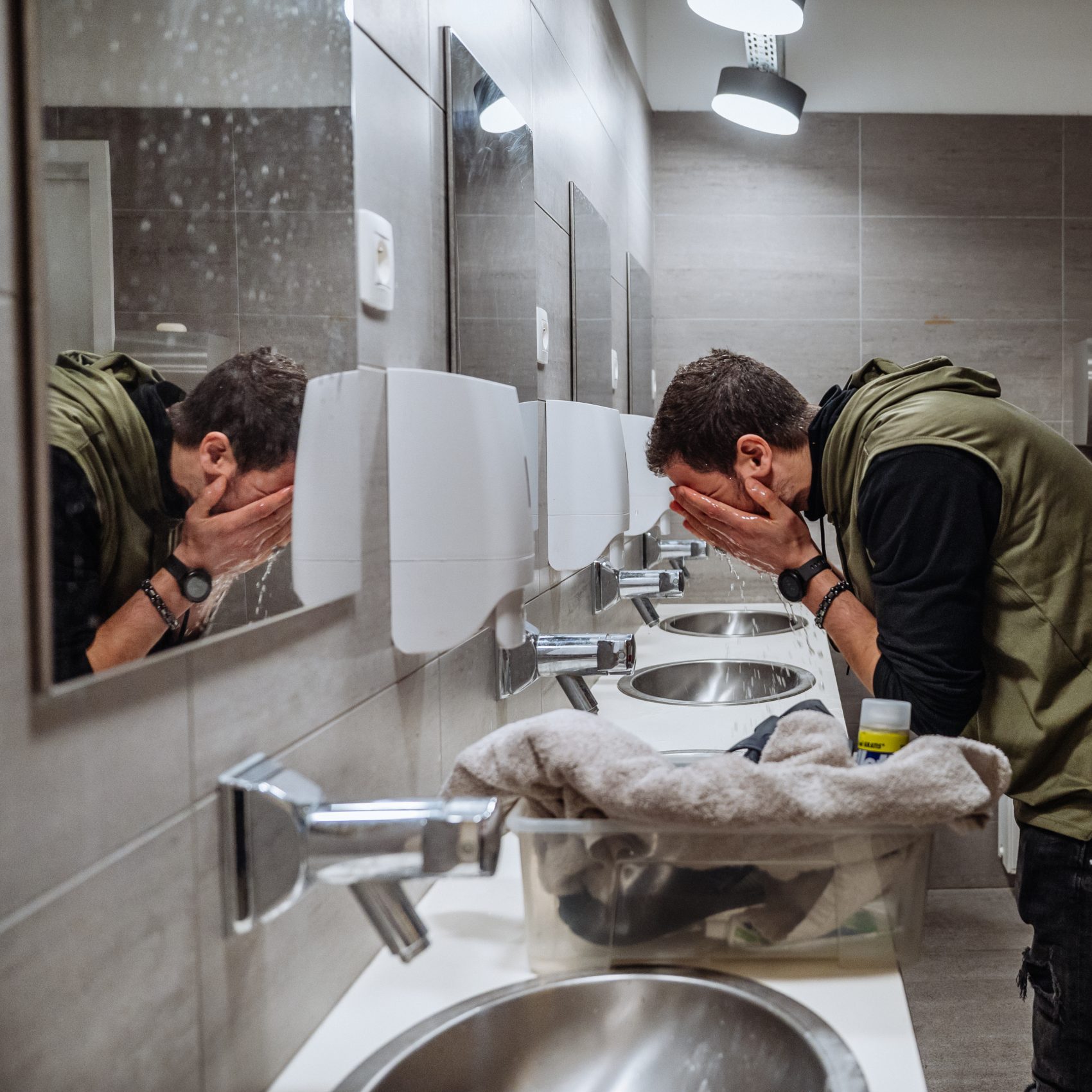
Everyday access to fundamental services
Psycho-medical-social services
8 peoples or families rehoused in 2025 with a housing social worker in the day center
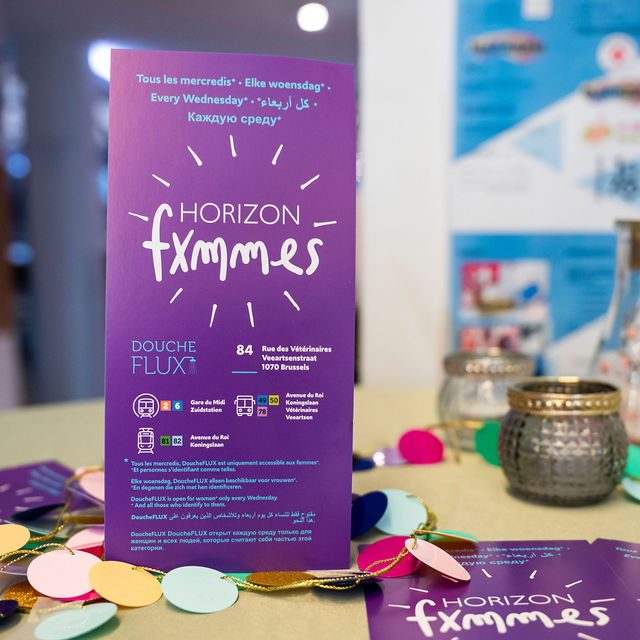
A safe and caring space for homeless women. We work against gender violences that lead to experiencing homelessness.
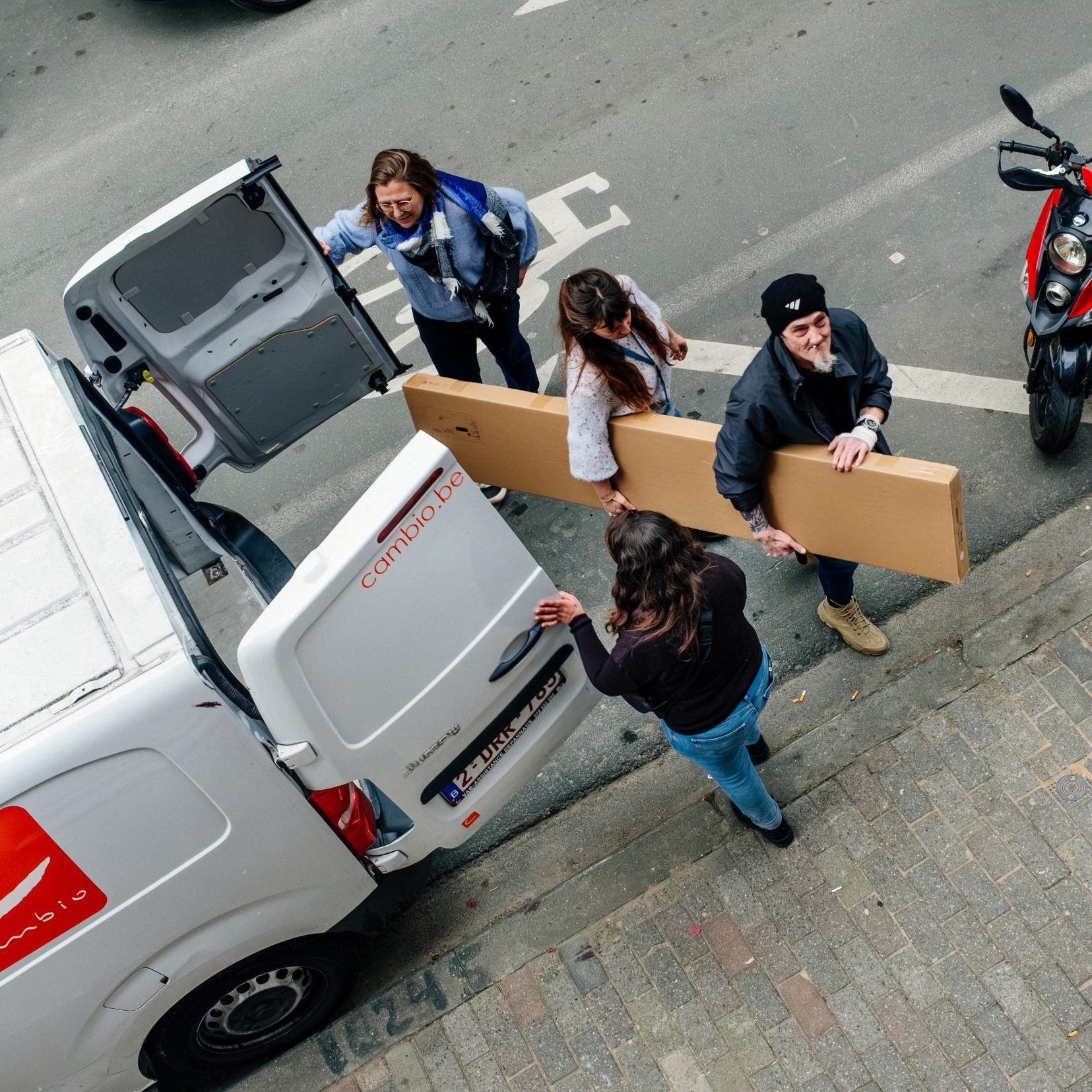
29 people housed and supported by the team in 2025
Where does the term sans-chez-soirisme come from?
When DoucheFLUX and the Syndicat des immenses began using the term sans-chez-soirisme, we looked for earlier occurrences of the word and found none.
So, did we invent it? Perhaps. But that is not really the point.
The term emerged from a very simple problem: how do you translate and name “homelessness” in French without reducing the issue to the absence of shelter?
DoucheFLUX and the Syndicat des immenses have therefore chosen to popularise the term sans-chez-soirisme — literally built around the idea of being without a “chez-soi”, a home of one’s own.
For us, naming the problem differently is already a first step towards changing the way we understand it. If we start from the principle that everyone should have access to a home, we can ask a different question: why are some people deprived of one? Thinking differently is already a way of acting.
Victories worth celebrating
At first, it was not easy to make our voices heard through the words we considered most appropriate. But increasingly, organisations, journalists and media outlets are using the French terms personnes sans-chez-soi and sans-chez-soirisme. Here are a few small victories:
- Bruss'help, the organisation coordinating emergency assistance and pathways towards social inclusion for people experiencing homelessness in the Brussels-Capital Region, has used the term sans-chez-soirisme since publishing its Masterplan for Ending Homelessness, following sustained advocacy by DoucheFLUX and the Syndicat des immenses.
- More and more non-profit organisations, as well as journalists and media outlets, are choosing to refer to personnes sans-chez-soi rather than personnes sans-abri. This may seem like a small change, but it is an essential first step.
DoucheFLUX continues to advocate for an end to homelessness. And while homelessness remains the English word we use to describe the issue, our French experience reminds us that the words we choose shape the solutions we imagine.
The more people understand homelessness as the absence of a home — rather than simply the absence of shelter — the closer we get to ending it.